

The House That Remembereth

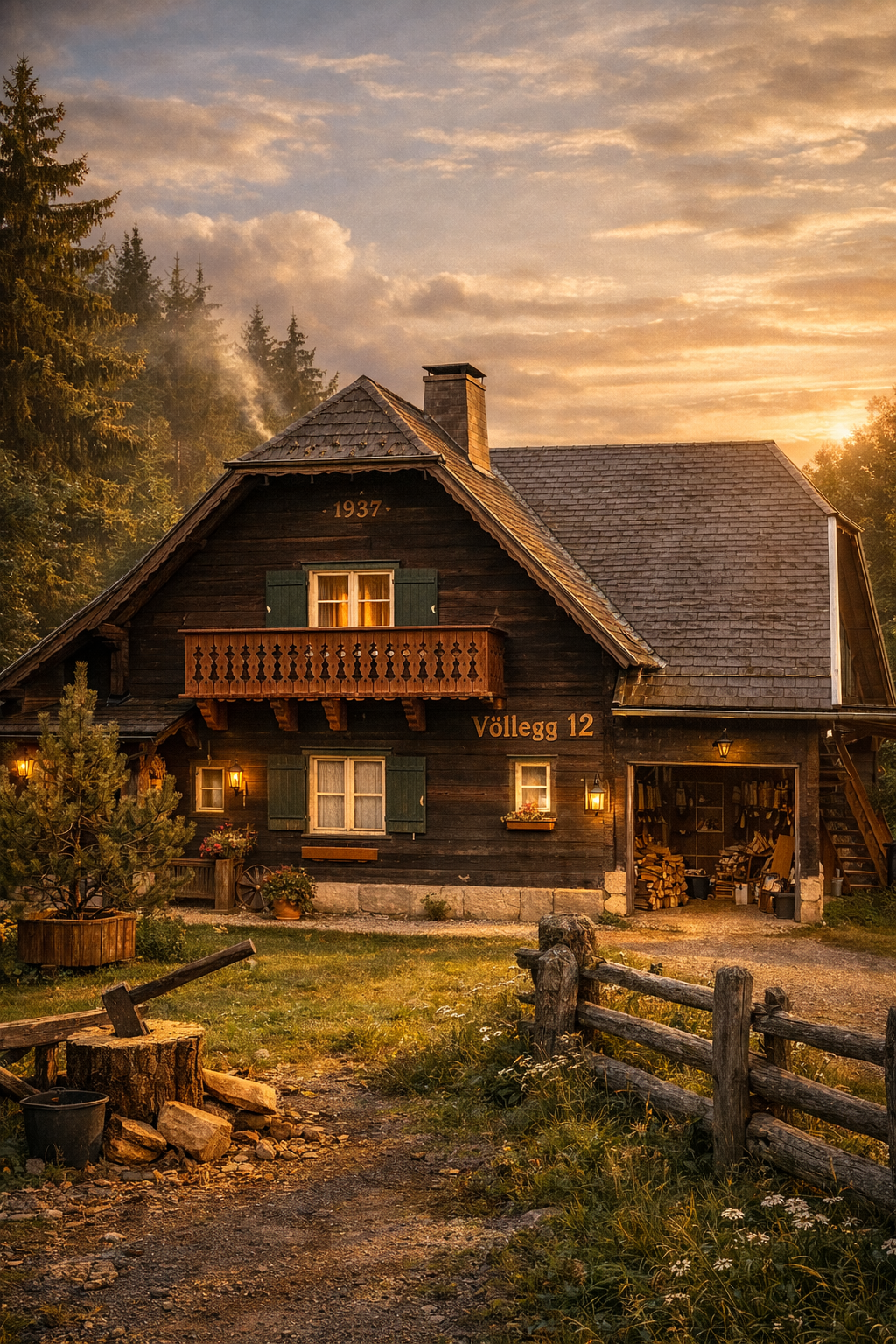
Upon the height of Schanz, where winds do wander as restless spirits and the pines stand sentinel against the passing of ages, there abideth a house.
Not merely timber and stone.
But memory made visible.
Born in the year of our Lord 1937, when Europe trembled beneath gathering clouds, it rose not in vanity, but in quiet resolve. Its beams were hewn by mortal hands, yet bound by something greater — endurance.
Its stones at the base lie not in ordered pride, but in humble strength, set close as brethren in adversity. No marble palace is this; no gilded hall. Yet it hath outlived the boastful and the bold.
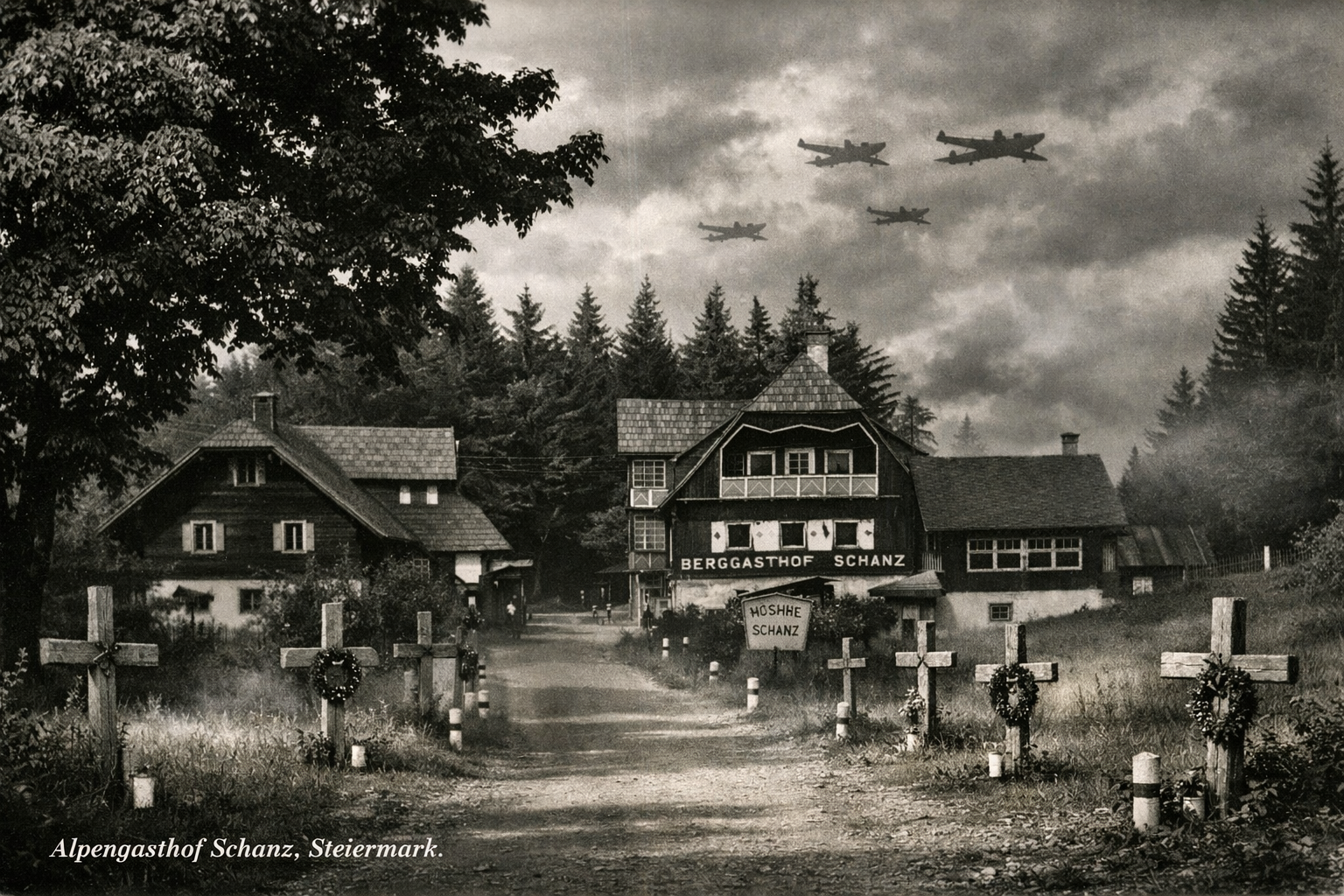
For long before that year, even in the maps of 1720, this place was marked — a pass, a guard, a watch upon the valley below. Here men did labour with wagons laden with timber; here mothers whispered prayers when thunder of distant war did roll across the hills; here children laughed beneath skies that knew both peace and peril.
Some speak in hushed breath of hidden chambers beneath the earth, as ancient as the secrets of Giza. Whether truth or tale, who shall say? Yet every legend springeth from a root unseen.
And lo — the springs that rise about this place. Water from stone. Life from silence.
Where water floweth, memory endureth.
Of Abandonment and Pride
Beside the ancient dwelling there standeth now a house of modern fashion — glass and angle, cold symmetry, fashioned in the likeness of our present age.
Yet it is hollow.
Its windows gaze upon naught. Its chambers echo without footfall. It is new — yet already weary.
Thus is the paradox revealed:
The elder wood still breatheth.
The newborn stone already faileth.
For a house without spirit is but a carcass clad in mortar.
Of the Grandfather
There was once a man named Jozef.
A master of wood, a teacher of many, who shaped not only timber but souls. In summers of childhood, I stood beside him in Neverice, learning the craft — how to measure, how to plane, how to listen.
Aye — to listen.
For wood doth speak, said he. And if thou heed its whisper, thy hands shall not err.
Long years hence, as I sanded the shutters of this house upon the Schanz, I felt his presence — as though from heaven's high balcony he guided my hand.
Some houses are not repaired.
They are awakened.
Of the Beacon
This place hath seen flame quenched by faithful hands. It hath seen refuse gathered from the folly of strangers. It hath seen men drawn from snow's cruel grasp.
Once, this pass was beacon and refuge alike. A place that guarded those who crossed it.
Now the enemy is not cannon nor blade.
It is forgetfulness.
For he who knoweth not his history is doomed to repeat it.
Yet he who knoweth and careth not is doomed to lose himself.

The Final Vision
Behold: a grandfather and his grandson, standing with backs turned to the world. The elder lifteth his hand and pointeth toward the ancient house upon the hill.
Beside them standeth the modern dwelling — silent, empty, forsaken by spirit.
The child looketh upward.
Not toward glass and glare —
But toward timber that hath endured.
For houses are not possessions.
They are inheritance.
And if we guard them not, we lose more than walls and roof.
We lose remembrance.
We lose honour.
We lose ourselves.
Thus standeth the house upon the Schanz —
Not merely as shelter,
But as witness.
And it awaiteth those who would be worthy of its memory.
